
Solar power has just become an option for a lot more households.
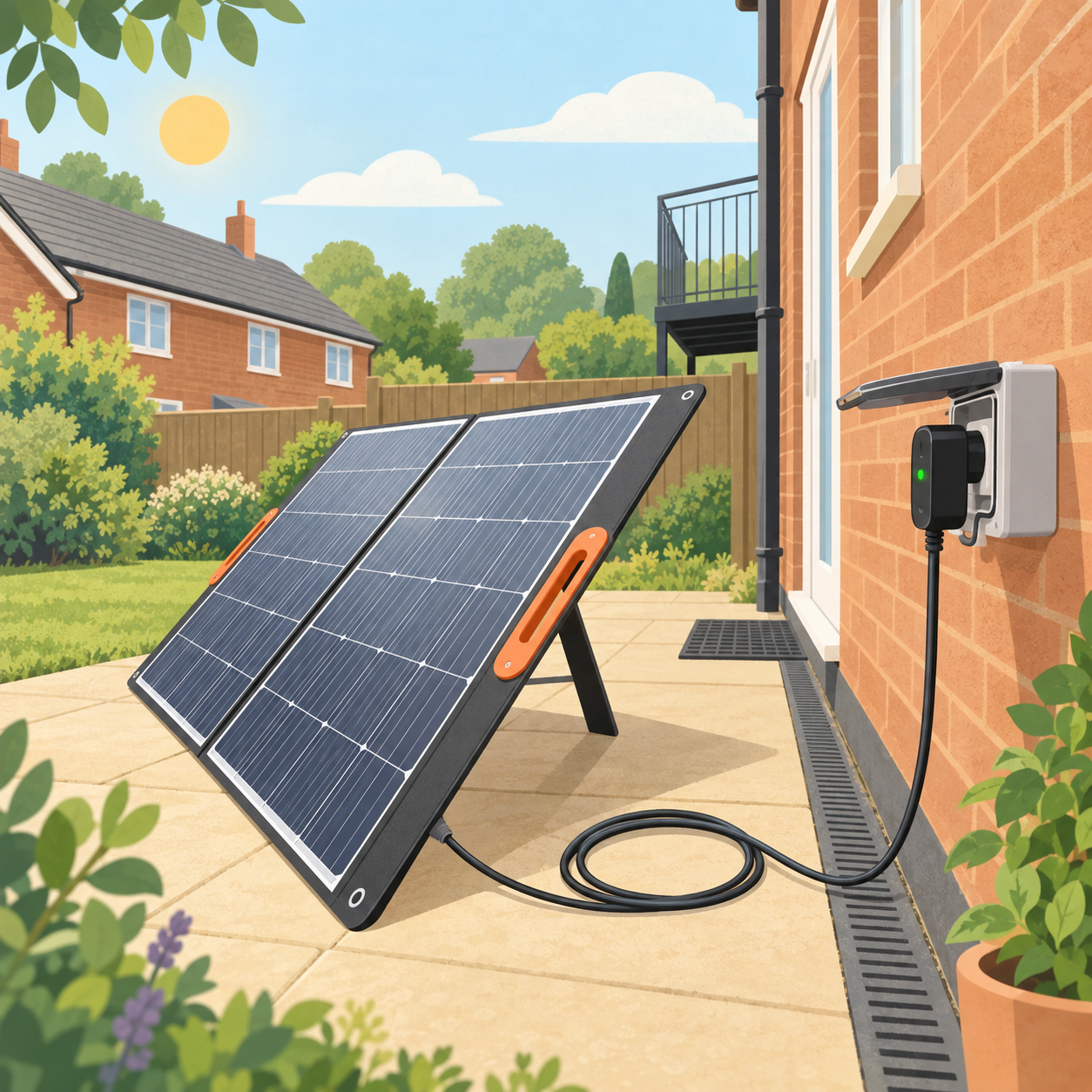
From 27th August 2026, approved plug-in solar systems became legal to buy and use in the UK. Instead of having a full solar array installed on your roof, these smaller systems can be positioned in places such as a garden, patio or suitable balcony and connected to your home through an approved household socket.
We’re excited to see them arrive. They could give renters, flat owners and households without a suitable roof an opportunity to generate some of their own electricity for the first time.
Buying plug-in solar online can be confusing. Not every system advertised as “plug-in solar” or “balcony solar” is approved for use in the UK, and buying from an unverified third-party marketplace could leave you with equipment that doesn’t meet UK requirements.
So, before spending money on a system, here’s what you need to know.
And if you’re still unsure whether plug-in solar is suitable for your home, Greener Homes is here to help. Our independent energy advisers can talk through your property, where you’re thinking of putting the panels and whether plug-in or conventional rooftop solar might be the better option.
Plug-in solar is new to the UK– but it isn’t a new idea
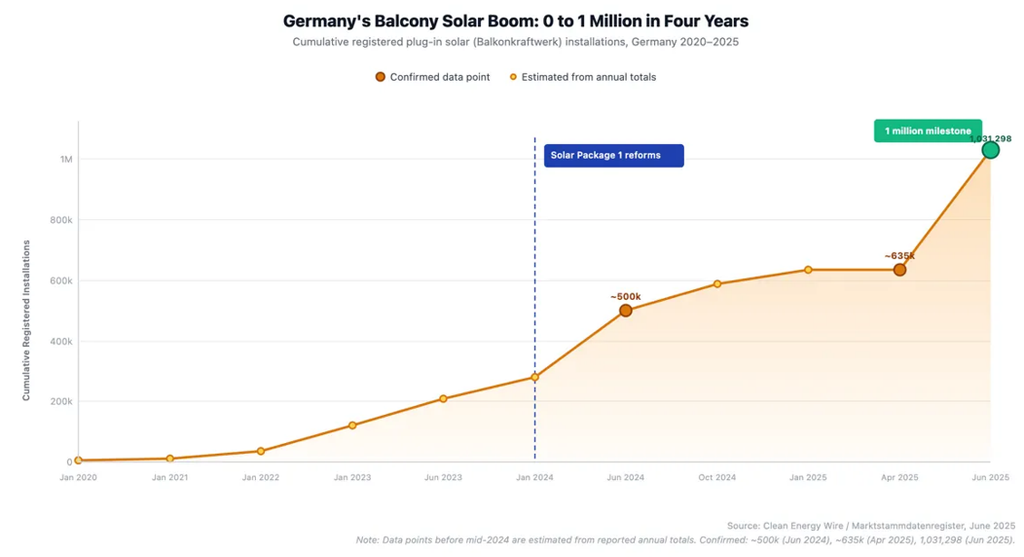
Germany has been using small plug-in systems – often called Balkonkraftwerke, or “balcony power stations” – for years.
Their popularity has grown rapidly as prices have fallen and Germany has made the rules around installation and registration simpler. Hundreds of thousands of new systems are now being registered there each year.
That’s useful context for UK. We’re not starting with a completely untested idea. We’re adopting a technology that has already become a familiar sight on balconies, terraces and gardens elsewhere in Europe.
What is new is having rules specifically designed for the British electricity network.
So, what actually is plug-in solar?
Think of it as a much smaller version of a conventional solar PV system.
Solar panels generate DC electricity from daylight. A microinverter converts that into AC electricity that your home can use. Instead of an electrician permanently wiring the system into your consumer unit, an approved plug-in system can feed electricity into your home through a suitable household socket.
If your panels are producing 500W and your home is using 700W at that moment, for example, the solar can contribute towards that demand and you import less electricity from the grid.
It’s designed to chip away at your everyday electricity use while the panels are generating.
Approved systems are limited to a maximum 800VA AC output – approximately 800W.
You may therefore see a kit advertised with 900W, 1,000W or even 1,200W+ of solar panels. That doesn’t necessarily mean it breaks the UK rules. Some compliant kits deliberately have more panel capacity, but the approved microinverter restricts the electricity supplied to the home to the permitted maximum.
What could an 800W system actually run?
The Department for Energy Security & Net Zero (DESNZ) says plug-in solar could save households about £70–£110 a year on energy bills, that’s enough to power your fridge/freezer for a year!
An 800W system operating near its maximum output could potentially cover the electricity being used by several smaller appliances at the same time.
For example, you might have:
- a fridge/freezer using around 100–300W while its compressor is running
- a broadband router using roughly 10–20W
- a laptop using around 30–100W
Put the washing machine on and the demand may rise considerably. Switch on a 3kW kettle and the solar isn’t going to power it by itself – but it can still contribute towards the electricity being used, with the rest coming automatically from the grid.
And 800W is a maximum, not a guarantee.
A cloudy November afternoon in Preston is obviously going to produce something very different from a bright July lunchtime in Morecambe.
Orientation, shading, panel angle, weather, tariff and the time of year all matter.
That’s why the best way to think about plug-in solar isn’t “What can I run from it?”
It’s: “How much of the electricity I’m already using can I avoid buying from the grid?”
How does it compare with rooftop solar?
Plug-in solar isn’t a cheaper version of a full rooftop solar system. It’s a different solution for a different situation.
An approved plug-in system is limited to around 800W of AC output. A typical domestic rooftop solar installation can be several kilowatts in size. That means rooftop solar can generate considerably more electricity over a year.
A conventional system can also be designed around your household’s needs and potentially combined with battery storage, an EV charger, a heat pump and smart electricity tariffs. Eligible rooftop systems can also export surplus electricity and receive payments through an export tariff (SEG).
So, if you own your home, have a suitable unshaded roof, intend to stay there and have the money available for a larger installation, we’d recommend investigating conventional rooftop solar before automatically choosing plug-in solar. It costs considerably more upfront, but it is generally a much more capable and future-proof home energy system.
Plug-in solar really comes into its own where rooftop solar isn’t realistic. You might rent. You might own a flat but not the roof. Your roof might be unsuitable. You might expect to move home. Or spending several thousand pounds on solar simply might not be an option.
In those circumstances, being able to generate even a modest amount of your own electricity is a genuinely exciting development.
It’s also another small step towards greater energy security. The more renewable electricity we generate here in the UK – from large solar farms and rooftop arrays right down to small plug-in systems – the less electricity we need to generate using imported fuels exposed to volatile global energy markets.
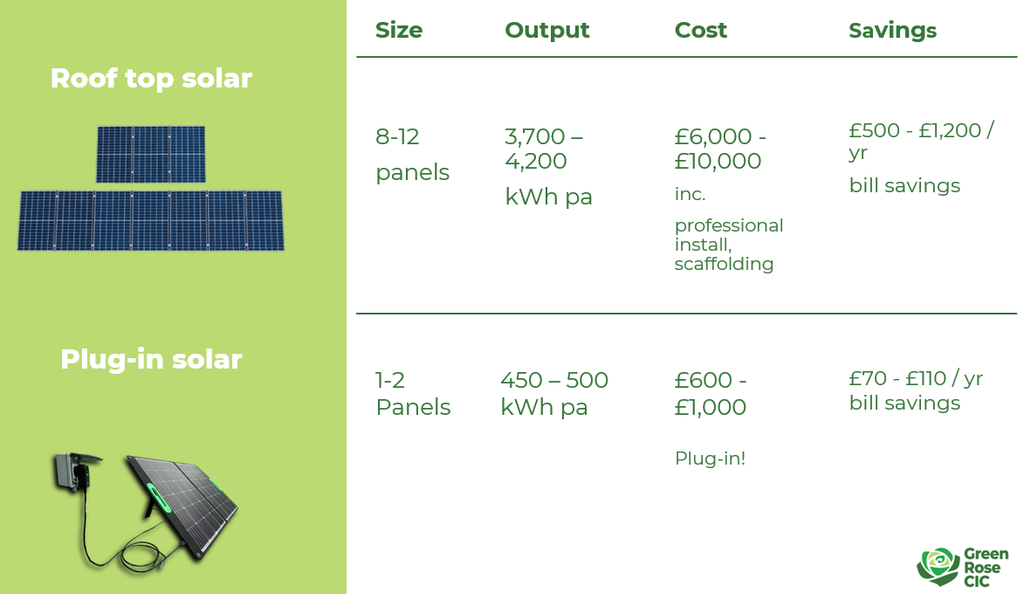
Please note: These figures are intended as a general guide only. Costs, electricity generation and savings can vary considerably depending on the system, property, location, energy use and electricity tariff. Plug-in solar savings are based on DESNZ estimates.
Where can I buy approved plug-in solar?
This market is developing quickly, so we’d recommend checking availability and compliance at the point you buy.
UKSOL was the first UK manufacturer to achieve the required regulatory compliance for its Plug-In Solar Pro range.
Argos
Argos was one of the first major high-street retailers to start selling compliant UKSOL systems.
At the time of writing, its range includes:
UKSOL 515W Pro Compact – Hybrid Mount – £599
View at Argos
UKSOL 460W Pro Compact – Ground Mount – £849
View at Argos
UKSOL 890W Pro Duo – Hybrid Mount – £849
View at Argos
UKSOL 1030W Pro Plus – Hybrid Mount – £899
View at Argos
UKSOL 1260W Pro Max – Ground Mount – £989
View at Argos
UKSOL 890W Pro Duo – Ground Mount – £999
View at Argos
You can also find out more about the manufacturer directly at UKSOL.
Screwfix
Screwfix has also listed a plug-in solar package:
PowerXpress 800W Bifacial Plug-In Solar Power Kit, including two 460W panels and an 800W microinverter – £669.
Octopus Energy
Octopus has become the first major UK energy supplier to offer plug-in solar, with launch prices starting from around £450.
See Octopus plug-in solar packages
Other major retailers including B&Q, Currys and Wickes have also been involved in plans to bring plug-in solar to the UK market, so expect the choice to increase.
Before buying anything, check the device register
This is one of the most important things to mention.
Don’t assume a system is legal to use because it has a three-pin UK plug or because an online listing calls it “UK plug-in solar”.
There are plenty of balcony solar systems available internationally and through online marketplaces. They may look almost identical, but that doesn’t mean they’ve been approved for use in the UK.
Check the exact model against the Energy Networks Association’s Connect Direct LCT Device Register before purchasing.
Check the ENA Plug-In Solar Device Register
If you’re struggling to work out whether a system is compliant, speak to us at Greener Homes before taking the leap.
Plug-in doesn’t mean anything goes
The simplicity of these systems is part of their appeal, but we’d be wary of treating them like another household gadget.
They’re generating electricity and feeding it into your home’s existing wiring. The condition of that wiring therefore matters.
UKSOL/Argos specify that their compliant systems should use the factory-fitted BS 1363 plug and cable. It shouldn’t be cut off, replaced or modified to make the system reach a different socket. Some systems also specify connection to a suitable outdoor household socket.
SAFETY WARNING: DON’T plug a solar system into a standard extension lead or multi-way adaptor.
Standard household extension cables are designed to send power, not receive it, so they could become dangerously hot. Always check before buying how long a cable you need and make sure the panels you buy come with a long enough cable.
Solar-specific MC4 extension cables do exist, but any additional equipment needs to be suitable for the system and installed in accordance with the manufacturer’s instructions.
Is your home’s wiring suitable?
For many homes it will be, but Lancashire has a huge variety of housing – from relatively new properties to Victorian terraces, older stone cottages, converted flats and homes whose electrics may have been altered several times.
Take extra care if:
- you don’t know the age or condition of your wiring
- your electrics haven’t been inspected for many years
- the socket is loose, cracked, discoloured or shows signs of overheating
- you have known electrical faults
- your consumer unit doesn’t have modern protection such as RCDs.
A simple socket tester can identify some basic wiring faults, but it doesn’t replace a proper electrical inspection.
If you’re unsure, ask a qualified electrician to check the installation and tell them you’re considering connecting plug-in solar.
You also need to think about physically securing the panels themselves. They should be fitted using the manufacturer’s approved mounting system and secured properly against wind – something particularly worth remembering with Lancashire weather!
Our friends at the North West Net Zero Hub have produced a really useful guide to plug-in solar electrical safety, including advice about older electrical installations, sockets, mounting and safe use.
We’d strongly recommend reading it before buying a system.
Read the North West Net Zero Hub Plug-In Solar Safety Guidance
Do I need permission?
Possibly – and it’s much better to find out before ordering the panels.
If you rent your home, speak to your landlord.
If you’re a leaseholder or live in a managed building, you may need permission from your freeholder, landlord or building manager, particularly if you’re:
- drilling into an external wall
- attaching equipment to a balcony, railing or communal area
- installing an external socket
- changing the external appearance of the building.
If you own a flat, check your lease for restrictions relating to balconies, external walls, communal areas, fire safety and insurance.
Planning rules can also apply depending on the property and where the equipment is positioned. England has introduced permitted development rights intended to make installing plug-in solar easier, but that doesn’t mean every installation automatically qualifies.
Listed buildings, conservation areas and unusual installations need particular care. You can check the rules for your property through the Planning Portal.
We’d also recommend contacting your buildings and contents insurer before installation and checking whether your policy covers outdoor solar equipment.
Register your plug-in solar
There’s one final job that shouldn’t be forgotten.
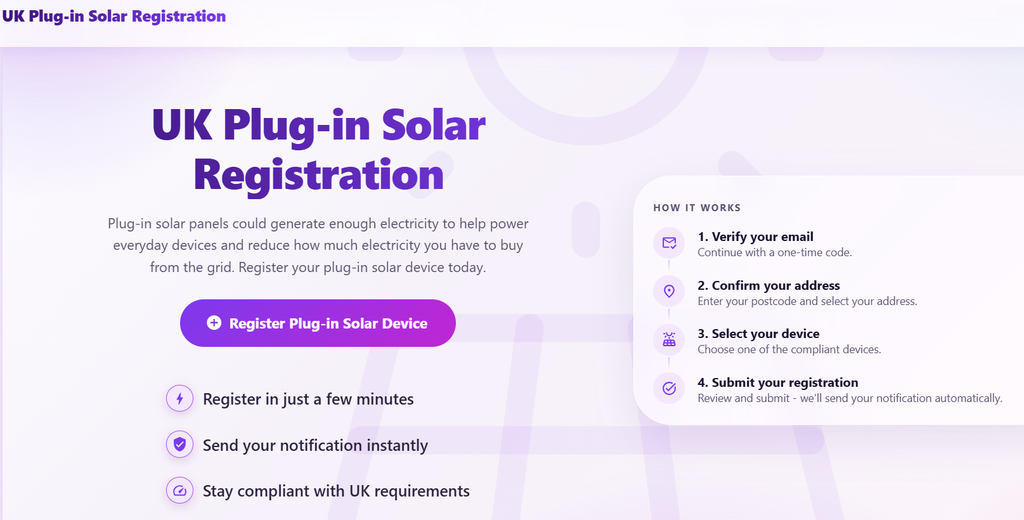
Plug-in solar must be registered with the local Distribution Network Operator (DNO) BEFORE use.
For Lancashire households, that’s SP Electricity North West.
Registration lets the network operator know that a small electricity generator has been connected at your property and power is entering the network
You can register an approved system through:
Register your plug-in solar at My Plug-In Solar
SP Electricity North West also has its own guidance explaining the process and requirements:
Read SP Electricity North West’s plug-in solar guidance
Don’t treat registration as optional – it’s a legal requirement.
A small panel can still be a big step
Solar is already growing rapidly in the UK. Nearly 172,000 solar installations were fitted between the start of 2026 and late August.
Plug-in solar could bring another group of households into that story. For somebody who rents, lives in a flat, doesn’t have a suitable roof or simply can’t justify the cost of conventional solar, this could finally provide an affordable way to generate some of their own renewable electricity.
Germany shows what can happen when small-scale solar becomes cheaper, familiar and easy for ordinary households to access. It goes from being a specialist bit of renewable technology to something quite normalised and accessible.
We’d be pleased to see the same thing happen here.
If you’re still not sure, Greener Homes in Lancashire provides free and impartial home energy advice to Lancashire residents. We can talk through your property and help you understand whether plug-in solar makes sense for your circumstances – or whether another option could be better suited to your home. You can call us directly on 0800 058 4066 or book a free call back.
Plug-in solar isn’t going to replace rooftop solar. It doesn’t need to. What it does do is give more Lancashire households a chance to take part in generating their own clean electricity – and that’s something we’re very pleased to see.
Frequently Asked Questions
Do I need an electrician to install plug-in solar?
Approved plug-in solar systems are designed so that they can be set up by the householder without having a new dedicated electrical circuit installed.That doesn’t mean every home’s electrics will automatically be suitable. If you live in an older property, don’t know the condition of your wiring or aren’t sure whether you have appropriate RCD protection, we’d recommend speaking to a registered electrician before buying a system.
Can I plug it into any socket?
No. Your system should be plugged directly into a suitable UK socket using the original plug and cable supplied by the manufacturer.
Don’t use an extension lead, cable reel, multi-way adaptor, travel adaptor or plug-in RCD adaptor. If you’re connecting to an outdoor socket, make sure it has the weather protection required by the system manufacturer.
Will plug-in solar still work when it’s cloudy?
Yes. Solar panels need daylight rather than blazing sunshine, so they’ll continue generating electricity on overcast days – just usually at a lower level.
Do the panels have to face south?
No. South-facing panels will generally give you the highest annual generation, but east and west-facing locations can still be worthwhile.
East-facing panels tend to produce more earlier in the day, while west-facing panels favour the afternoon and evening. Heavy shading or a north-facing position will normally result in considerably lower generation.
Can plug-in solar power my whole house?
Not usually. Plug-in solar is much smaller than a conventional rooftop array and is better thought of as a way of reducing the electricity you’re buying from the grid, rather than powering your entire home.
On a sunny day, it could contribute towards everyday loads such as your fridge, Wi-Fi router, computer, TV and other appliances. Whenever your home needs more electricity than the panels are producing, the extra simply comes from the grid as usual.
Will I keep my electricity on during a power cut?
No. Standard plug-in solar isn’t a backup power supply. If there’s a power cut, the microinverter is designed to automatically stop supplying electricity. This is an important safety feature that prevents your system from feeding electricity into the network while engineers may be working on it.
How much money could I save?
The Department for Energy Security & Net Zero (DESNZ) estimates that plug-in solar could save a household around £70–£110 a year. That’s not a guaranteed saving. How much you generate will depend on the size of your system, its direction and angle, shading, your location, the weather, your electricity tariff and, importantly, how much of the solar electricity you use while it’s being generated.
Can I add a battery?
Not under the current UK plug-in solar framework. The new rules don’t currently cover plug-in batteries or plug-in solar products with integrated battery storage. If battery storage is important to you, it’s worth looking at whether a conventional rooftop solar and battery system would be more suitable for your home.
Does it require maintenance?
Balcony solar generally requires little maintenance. Keep the panels reasonably clean and free from leaves, heavy dirt or other obstructions, and periodically inspect the cables, connectors and mounting system. Do not lean over a balcony or work at height to clean or inspect a panel. Arrange professional help if it cannot be reached safely.
How long should plug-in solar last?
Solar panels are designed to generate electricity for many years (25+ years), although their performance will gradually reduce as they age. Other components, including the microinverter, may have a different expected lifespan. Check the manufacturer’s warranty and performance guarantee for the particular system you’re considering before buying.
What happens to surplus electricity?
If you generate more electricity than you’re using, the surplus will flow back to the grid. You won’t currently be paid for this, so you’ll get the most value by using your solar electricity while it’s being generated.
Do I need to tell my home insurer?
We’d recommend it. Insurance policies differ, so speak to your buildings or contents insurer before installing plug-in solar and check whether there are any conditions you need to meet.
If you rent your home or you’re a leaseholder, there may also be requirements from your landlord, freeholder or managing agent. It’s worth keeping your receipt, product information, DNO registration and any written permissions together in case you need them later.
How do I know whether a product is UK compliant?
Check the exact model against the Energy Networks Association’s Connect Direct LCT Device Register before purchasing. Check the ENA Plug-In Solar Device Register
Use only the panels, inverter, cables, plug, connectors and mounting equipment supplied or approved for that system. Avoid mixing components from different products or buying an unverified system from a third-party marketplace.
Do I need to notify the electricity network?
Plug-in solar must comply with the applicable electricity-network connection requirements. If you live in Lancashire, you must register an approved system through: Register your plug-in solar at My Plug-In Solar. SP Electricity North West also has its own guidance explaining the process and requirements: Read SP Electricity North West’s plug-in solar guidance.