
What Is an Air Source Heat Pump?
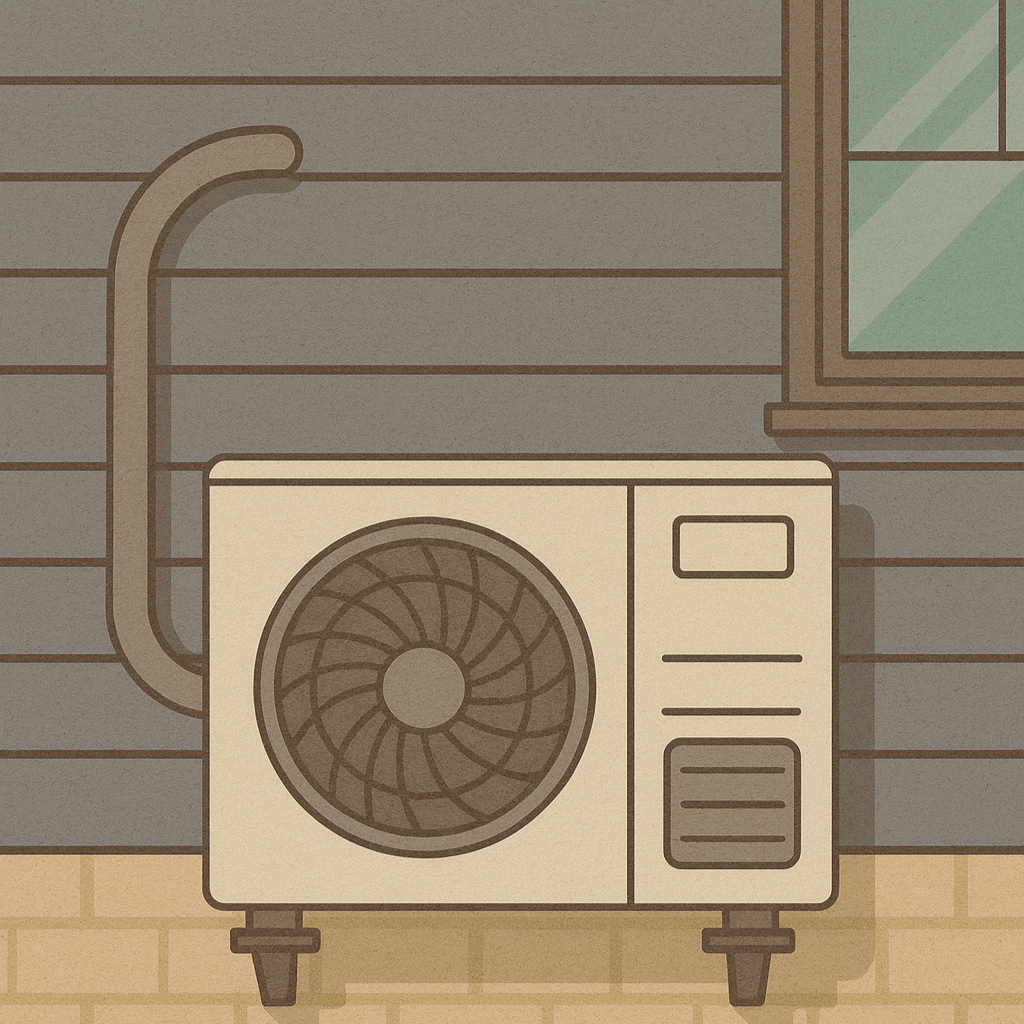
An air source heat pump (ASHP) is a low-carbon heating system that takes warmth from the outside air and upgrades it to a higher temperature to heat your home and hot water. Even on cold days, there’s still enough ambient heat outdoors for a heat pump to extract and use.
It works like a fridge in reverse: instead of moving heat out of a cold space, it moves heat into your home.
How Does It Work?
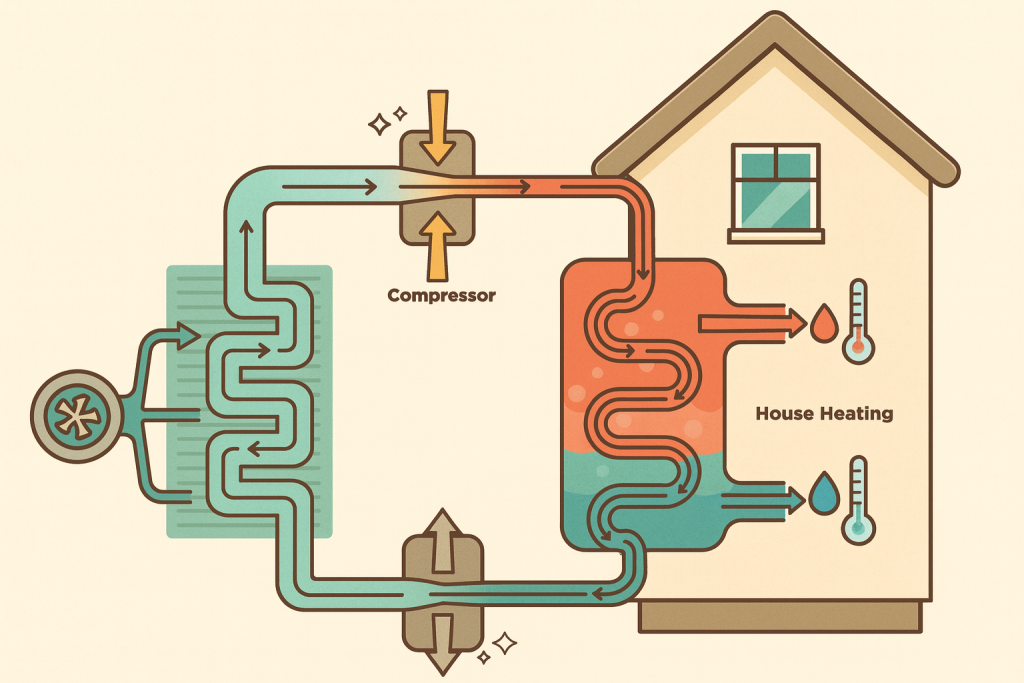
- The outdoor unit pulls in air.
- A liquid refrigerant absorbs heat from the air, and it changes into a gas.
- A compressor increases the temperature of the refrigerant gas.
- That heat is transferred into your home’s heating system (radiators or underfloor).
- The refrigerant cools, turns back into liquid, and the cycle repeats.
Because heat pumps move heat instead of generating it, they are typically 3–4 times more efficient than traditional boilers.
How Efficient Are Air Source Heat Pumps?
Heat pumps offer impressive efficiency because for every 1 unit of electricity they use, they can deliver 3-4 units of heat. The key figure to look at is the Seasonal Coefficient of Performance (SCOP), which tells you how the system performs across a whole year, not just in ideal lab conditions.
Efficiency tends to be highest when homes:
- are well insulated
- use low-temperature radiators or underfloor heating
- avoid unnecessary temperature swings
- have their controls set correctly
Are Heat Pumps Suitable for Homes in Lancashire?
Most homes can have a heat pump — but some homes may need small upgrades first.
Best suited if your home has:
- Good insulation (walls, loft, windows)
- Radiators sized for low-temperature heating (these are bigger and have wider diameter pipes)
- Space outside for the unit
- A hot water cylinder space indoors
Heat pumps work especially well if you’re replacing:
- electric panel heaters
- oil or LPG boilers
- old, inefficient gas boilers
For rural Lancashire homes off the gas grid, heat pumps often give both lower running costs and significant carbon savings.
How Much Does a Heat Pump Cost?
Typical installation costs in the UK are:
- £10,000–£14,000 for a standard air source heat pump system
- More for complex installations (large homes or radiator upgrades)
However — you do not need to pay the full amount yourself.
THE BOILER UPGRADE SCHEME (BUS)
Helping homeowners cover the cost of low-carbon heating
The Boiler Upgrade Scheme offers a £7,500 grant towards the cost of installing an air source heat pump in England and Wales.
Key points:
- Available for homeowners and small landlords
- Property must have a valid EPC
- You must be replacing a fossil fuel system (e.g., gas, oil, LPG or direct electric)
- Installers apply for the grant on your behalf — you don’t need to do any paperwork
- The discount is taken off your quote up front
This means many installations drop to around £2,500–£5,000, depending on your home.
Greener Homes can help you understand whether your property is suitable and how the scheme works in practice.
Heat Pumps and Solar Panels
If you have (or plan to get) solar PV, a heat pump can significantly reduce running costs because it uses your low-cost or free daytime electricity to heat your home and water.
What Are the Benefits of a Heat Pump?
✔ Lower carbon emissions
✔ More stable running costs
✔ Safer (no combustion, no fumes, no risk of carbon monoxide)
✔ Quiet modern units
✔ Works well with solar PV
✔ Long lifespan (15–20+ years)
✔ Future-proof heating in a net-zero UK
What Should You Do Next?
If you’re in Lancashire and curious about whether an air source heat pump would work for your home, Greener Homes can:
✔ Provide impartial advice
✔ Help you understand grants
✔ Talk through suitability and insulation
✔ Help you prepare for installer surveys
✔ Signpost you to reputable, TrustMark-registered installers
Just get in touch — we’re happy to help.