
Background:
Mark (not his real name) is a resident of Blackpool living in a terraced property with his family, including his young autistic son. Lately, Mark had become increasingly worried about persistent damp patches and peeling wallpaper inside his home. Unsure of the cause and concerned about his son’s comfort and health, Mark mentioned the issue to a colleague. The colleague recommended he contact Greener Homes in Lancashire. Taking this advice, Mark reached out to Greener Homes, hoping to find answers and improve his home’s condition.
Housing Conditions and Challenges
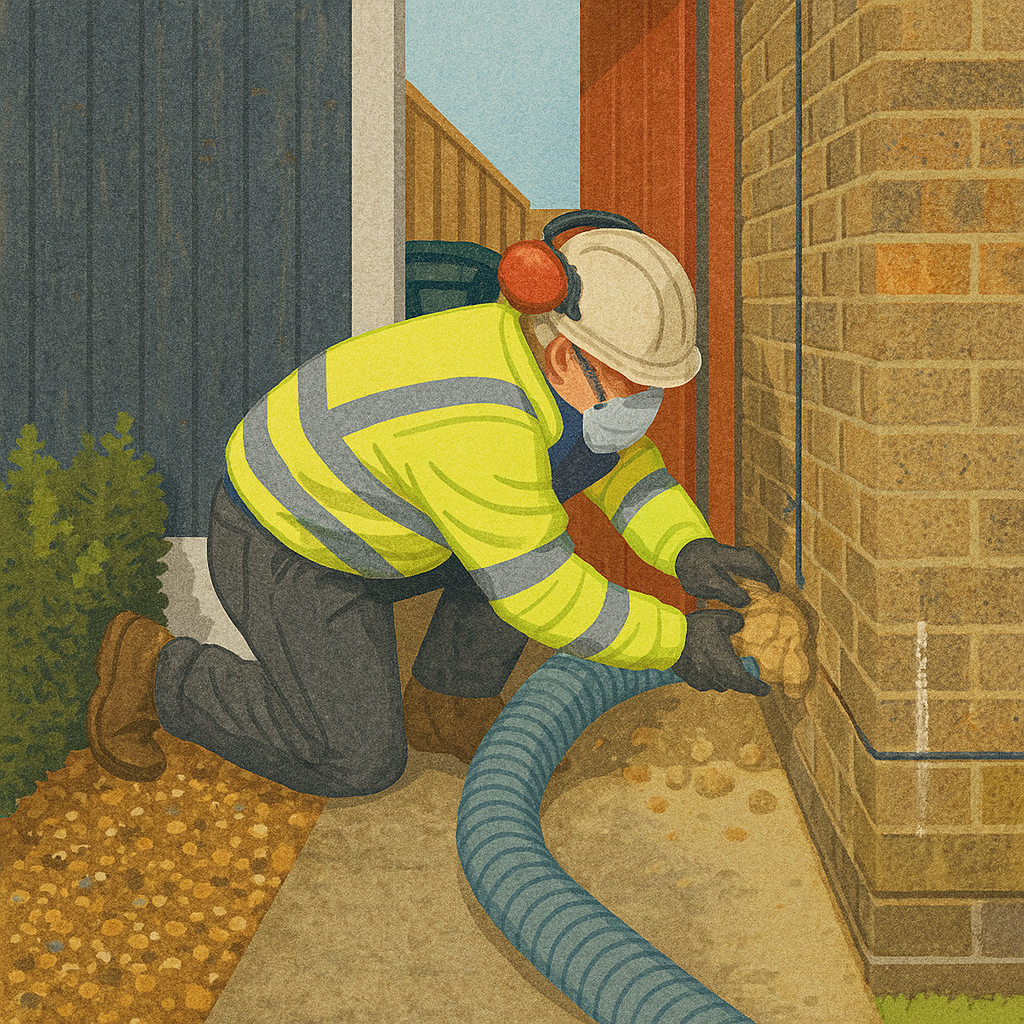
Mark’s home was built in the mid-20th century and, like many older terraced houses, it had cavity wall insulation added years ago to improve energy efficiency. Over time, however, this insulation appears to have become a problem. Mark suspected that the old cavity wall insulation might be wet and degraded, allowing moisture to seep through the walls. A camera inspection of the wall cavities confirmed his suspicions: the insulation was saturated and clumping, likely holding moisture against the inner walls and causing internal damp spots and black mould in certain rooms. This hidden issue was a major challenge – not only was it making the house cold and damp, but it also threatened the indoor air quality. For Mark’s family, and especially for his autistic son who is sensitive to household conditions, a damp home environment was far from ideal and needed addressing quickly.
Energy Usage and Resident Actions
Because of the damp walls and compromised insulation, Mark’s home was harder to keep warm, which meant the heating had to work overtime just to maintain comfort. The wet insulation was effectively reducing the energy efficiency of the house, heat escaped more easily through the damp walls – leading to higher energy bills for the family. Before contacting Greener Homes, Mark tried a few simple actions on his own: he increased ventilation by opening windows on dry days and wiped down mildewed areas with mould spray to prevent spread. These efforts helped only temporarily; the root cause remained. Mark had not yet installed any low-carbon technologies in the house (no solar panels, heat pump, or other renewable systems at this stage), so he was relying entirely on a traditional gas central heating system. Despite this, he was very interested in making his home more energy-efficient. In fact, during his initial call he mentioned a long-term goal: installing solar panels in the future once the damp and insulation issues were sorted out. This showed that Mark was proactive about saving energy – he just needed guidance on where to start given the current challenges.
Support and Advice Provided by Greener Homes
When Mark connected with Greener Homes in Lancashire, Tamsin listened carefully as he described the damp problems. She recognised that aged or faulty cavity wall insulation can lead to the kind of damp issues Mark was experiencing. In a friendly and supportive manner, Tamsin walked Mark through a plan of action. First, she advised him to check whether the cavity wall insulation was under a warranty or guarantee. Specifically, they suggested contacting the Cavity Insulation Guarantee Agency (CIGA) to see if his home’s insulation had a 25-year guarantee from when it was installed. If such a guarantee existed, it could cover the cost of removing or repairing the insulation.
Next, Tamsin explained what could be involved in fixing the problem. They discussed the option of professional insulation removal – a process where specialists extract the damp insulation from the cavity walls. Mark learned that while this process can be very effective in curing damp, it can be a significant undertaking. Tamsin gave Mark an idea of potential costs for insulation removal and restoration, so he wouldn’t be caught by surprise. Knowing the expected cost range helped Mark feel more prepared and in control of the situation.
Crucially, the advisor also shared information about an upcoming initiative to help homeowners fund these kinds of improvements. They talked about a new “Property-Linked Finance” program that was on the horizon. This program, once available, would allow homeowners like Mark to access affordable loans for energy upgrades, with the loan tied to the property rather than the individual. In practical terms, Property-Linked Finance means Mark could undertake major energy retrofit work (such as removing faulty insulation, improving insulation properly, or even installing solar panels in the future) with low up-front costs. The repayment would be attached to the home and could be spread out, making it far more affordable for families on a budget. This was encouraging news to Mark, since it opened up possibilities to fix the current damp issue and pursue his solar panel dream down the line without financial strain.
Throughout the call, Tamsin provided not just technical guidance but also moral support. She reassured Mark that he had done the right thing by investigating the issue and seeking advice, and that solutions were available. She suggested practical next steps: for example, double-checking for a CIGA certificate among his home documents, contacting CIGA or the original installers to make a claim if a guarantee was in place, and obtaining quotes from trusted insulation removal contractors (Greener Homes provided a list of reputable local contractors). They also discussed interim measures – like using a dehumidifier or ensuring vents are unobstructed, to help manage the damp while a permanent fix was being arranged.
Finally, given Mark’s interest in solar panels, Tamsin touched on that topic as well. She explained that once the damp and insulation problems were resolved and the property was dry and well-insulated, installing solar PV panels could indeed be a great next step. Greener Homes offered to provide more detailed guidance on solar options when Mark was ready, and even mentioned that the Property-Linked Finance scheme could potentially help fund solar installation in the future. Mark was appreciative to have a clear roadmap: fix the damp issue first, improve the home’s insulation and fabric, and then move on to exciting upgrades like solar energy. By the end of the consultation, he had a much better understanding of his home’s problems and the path forward, with actionable advice in hand.
Resident Soundbites
Mark was relieved and grateful for the support he received. Here are a few of his thoughts in his own words:
“I was really concerned about the damp patches on my walls and I didn’t know where to start. It was worrying me, especially thinking about my son’s health. Talking to the Greener Homes advisor was a huge relief – they quickly figured out what the issue likely was and told me exactly what steps I could take,” Mark said about his experience.
“They helped me understand that my old wall insulation might be the culprit. I had no idea about insulation guarantees or removal options before. The advisor explained it all in a way that made sense. I feel like I’ve gone from having a mystery problem to having a clear plan to fix it,” he added.
“Now I feel much more optimistic. Once we get this insulation sorted and the walls dry again, I’m excited to look into upgrading the house even more – solar panels were something I’ve always wanted, and knowing there might be affordable financing for it down the line is fantastic. I’m really grateful that this service was here to help us,” Mark shared enthusiastically.
(Quotes have been anonymised; the resident’s name has been changed for privacy.)
Impact and Next Steps
Mark was sent an email with links to the CIGA and was encouraged to give Greener Homes a call back if he needed any further advice or information. We hope that he has discovered his cavity wall insulation is insured and is now on the path to being assessed and removed.
Coastal towns such as Blackpool are not ideal candidates for cavity wall insulation. The often horizontal rain direction caused by prevailing winds across the Irish Sea can cause walls to become saturated in a way that doesn’t happen when the rain mainly comes down from above the roof.