

Janet (not her real name) is a resident of Morecambe who recently benefited from the Cosy Homes in Lancashire (CHiL) scheme. Through this council-backed initiative, she had solar panels installed on her roof and a home battery added to store excess solar power. Not long after the installation, Janet reached out to Greener Homes in Lancashire for advice on what to do next. She was on a fixed-rate British Gas electricity tariff and wasn’t aware of any options to better optimise her new solar and battery system. Janet also didn’t know much about selling her surplus solar power or whether she could adjust her energy plan to save more money. She hoped that by contacting Greener Homes, she would learn how to make the most of her panels and battery and get guidance on any other improvements she might need.
Housing Conditions and Challenges
Janet’s home is an off-gas property heated by an old oil-fired boiler. Living near the coast in the Morecambe area, the house can get very cold and damp, especially in the winter months. Janet suffers from limited mobility and has a history of leukaemia, conditions that make her especially vulnerable to cold temperatures. She often found herself feeling chilly at home but was hesitant to rely too much on the oil heating due to the cost. Despite having new solar panels generating electricity, her heating still depended on oil, and the house’s insulation and overall warmth left much to be desired. In short, Janet’s key challenges were a cold home with expensive, carbon-intensive heating, and new solar technology that she wasn’t fully equipped to take advantage of yet.
Energy Usage and Resident Actions
Before contacting Greener Homes, Janet hadn’t made any changes to her energy usage habits or tariff since getting the solar panels and battery. She remained on her standard fixed-rate electricity plan, which meant her battery would charge only when her solar panels produced excess power in the daytime and then discharge in the evenings. Because her tariff charged the same rate day and night, there was no incentive or strategy in place to charge the battery at a cheaper time – an opportunity she didn’t realise she was missing. In fact, Janet was unaware of time-of-use tariffs that offer lower electricity prices at off-peak times. With her heating, she tried to conserve oil by only running the boiler for short periods or in certain rooms, but this often left her still feeling cold. Other than the solar panels and battery (provided by the Cosy Homes scheme), Janet hadn’t installed any additional energy improvements, and she wasn’t sure what else could be done to make her home more comfortable and efficient. Overall, she was using her new equipment in a very basic way and not tapping into its full potential to improve her situation.
Support and Advice Provided by Greener Homes
Upon calling Greener Homes, Janet was connected with Tamsin, one of the energy advisors, who listened carefully to her situation. Tamsin first explained how Janet could save more on electricity by switching to a time-of-use energy tariff. On a time-of-use plan, electricity costs less during off-peak hours (for example, overnight) and more during peak hours, unlike her current flat-rate tariff. Tamsin described how Janet’s battery could be charged during the cheap off-peak hours at night and then used to power the home during expensive peak times in the day, thereby reducing her overall bills. In essence, by taking advantage of low overnight rates, Janet could store cheap energy and use it when prices are higher, which leads to significant cost savings.
This was a new concept to Janet, and she was intrigued by the idea that a different electricity plan – combined with smart use of her battery – could make such a big difference in her energy costs.
Next, Tamsin and Janet discussed her solar setup and the Smart Export Guarantee (SEG). Tamsin asked if Janet had signed up for an SEG tariff with her electricity supplier – a program that pays homeowners for any surplus solar electricity they send back to the grid. Janet hadn’t, and she soon learned why: she was missing a piece of paperwork needed to apply. Tamsin discovered that Janet had never received her DNO certificate (proof that her local Distribution Network Operator knows about and approves her solar installation). Without this confirmation from the DNO (in Janet’s area the company is Electricity North West), she wouldn’t be eligible to enrol in an SEG payment plan.
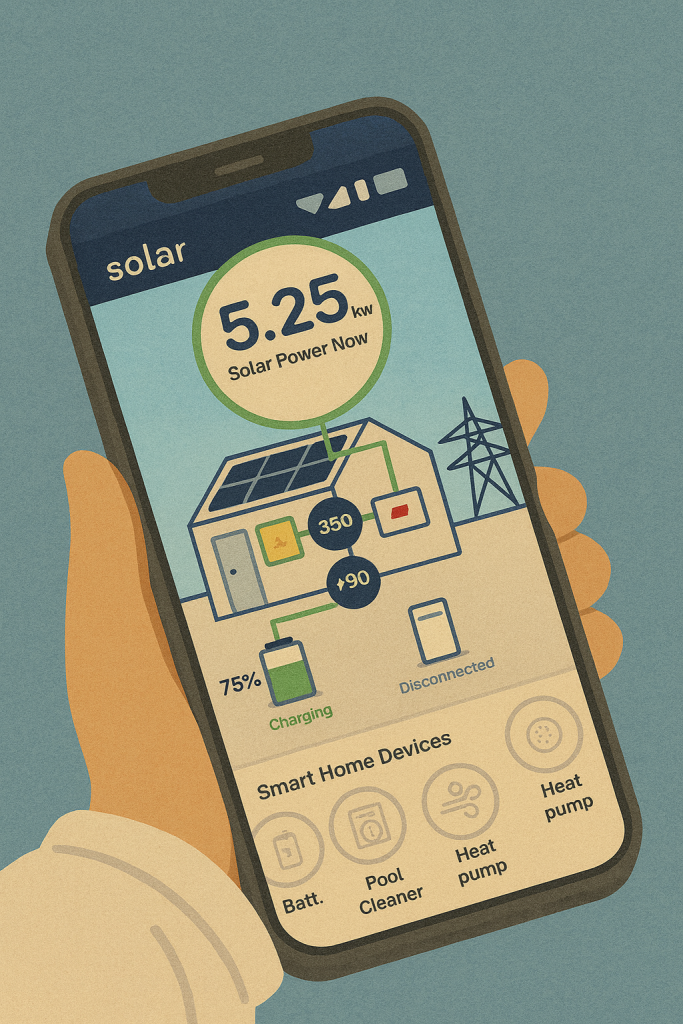
This gap was understandably frustrating for Janet, as it meant her excess solar power was effectively going unpaid. Tamsin assured her that this was a common hiccup and offered to help. Together, they looked at how to obtain the DNO approval certificate – Tamsin provided Janet with the contact information for Electricity North West and guidance on what details to request. Thanks to this support, Janet initiated the process of getting her DNO certificate, which would allow her to finally set up an SEG contract and start earning money (or bill credits) for the extra solar energy her panels generate.
During the same call, Janet shared more about her heating difficulties. Given the age of her oil boiler and how she often felt cold due to her health and mobility issues, Tamsin brought up the idea of switching her to a modern heat pump system. She explained the government’s Boiler Upgrade Scheme (BUS), which offers grants (currently £7,500) to help cover part of the cost of installing an air-source or ground-source heat pump
This caught Janet’s interest, but she was worried about the remaining cost – even with the grant, heat pumps can be expensive and usually require a homeowner contribution. Here Tamsin had more good news: she told Janet about another program called ECO4 Flex (a part of the Energy Company Obligation scheme) that might cover the full cost of a heat pump for her. Under ECO “Flex”, local councils can declare certain households as eligible for 100% funding for efficiency upgrades, especially when someone in the home has serious health conditions or disabilities that are worsened by the cold. Tamsin gently pointed out that Janet’s own circumstances – her history of leukaemia (immunosuppression) and limited mobility – are exactly the kind of health conditions that qualify a person as being “vulnerable to the cold”
With a supporting referral letter from her GP (doctor) stating that cold temperatures negatively affect her health, Janet could very likely be approved for a free heat pump installation through the ECO4 Flex route.
This news was a revelation for Janet. She had no idea that she might be entitled to this level of help. Tamsin outlined the next steps: Janet would need to get in touch with her GP about writing a simple letter, and then work with the local CHiL team (who administer the ECO funding in Morecambe) to submit an application for a heat pump. Tamsin made sure Janet understood that the Boiler Upgrade Scheme and ECO4 Flex are parallel options – BUS is a partial grant available to anyone eligible, while ECO4 Flex could potentially cover everything because of her personal health situation. With this explanation, Janet felt much more confident about exploring a heating upgrade, knowing that she might not have to pay for it at all.
Tamsin was friendly and empathetic throughout the call, offering both technical advice and reassurance. She normalised Janet’s concerns, pacing the session to her comfort, answering questions, and summarising key points. By the end, Janet had a clear action plan rather than a list of unanswered questions. In a single advice session, she went from being unsure about her solar-battery system and stuck with an old heating setup, to feeling empowered with knowledge on how to maximise her solar savings and pursue a warmer home through available grants.
Janet was extremely grateful for the guidance and took a moment to share her thoughts after the call. In her own words:
“I’ll admit, I had these solar panels fitted and a battery in place, but I was clueless about what to do after the installation. I didn’t even know there were special energy tariffs that could make using my battery so much cheaper. The Greener Homes advisor was incredibly patient – she walked me through everything. Now I feel much more confident about how to use my system day-to-day”
“Honestly, I’m just so grateful I made that phone call. If I hadn’t, I would have kept on with my expensive tariff and old heating, not realising there were better options. Now I have a plan – I’m going to look into switching to a smarter tariff, get the paperwork sorted to earn money from my solar panels, and follow up on the heat pump scheme. It feels like there’s finally a light at the end of the tunnel for me and my home.”
(Quotes have been anonymised; the resident’s name has been changed for privacy.)
Impact and Next Steps
Following the call, Tamsin sent Janet a helpful email summarising all the key advice and links to further information. This included a guide on comparing time-of-use tariffs and checking her smart meter compatibility, as well as the contact details and form needed to request the DNO approval certificate from Electricity North West. Tamsin encouraged Janet to reach back out to Greener Homes anytime if she had questions while taking these next steps.
Janet’s case is a great example of how a single advice call can empower someone to fully capitalise on home energy upgrades. She went from feeling unsure and underprepared to having a clear roadmap: adjust the energy tariff, monetise the solar power, and improve the heating system. By exploring a smart tariff and the Smart Export Guarantee, she can maximize her savings from the solar panels and battery storage. And by tapping into government schemes, she’s on track to upgrade her heating in a way that suits her health needs and budget. Greener Homes was able to turn Janet’s initial uncertainty into an optimistic action plan – guiding her towards a warmer, greener, and more affordable home.